Monday, June 14, 2010

Dawson College, McGill's Annex 1948-50

Moving in and the Water Wars

During the summer of 1947 upon completing my junior matriculation at West Hill High School in Montreal , a schoolmate, Dick Fleming, and I took a train from Montreal to a location about a hundred miles north of Sudbury that was essentially a hamlet in the forest for a railway siding, sawmill, lumberyard, barns for horses, and a small cluster of log cabins that would be our living quarters (You can read about this experience in the five previous essays in this blog published in March). In the following summer when I worked in the mines in Sudbury there was no room in town with the troops coming home so I had to share an uncomfotable bed with someone who worked on another shift. In short, I was used to Spartan conditions when away from home.


I arrived at Dawson College a few days after returning home from Sudbury. My initial shock was seeing for the first time these desolate surroundings and ugly spartan buildings. It was like returning to the bleak flat and treeless landscape I had just come from.

I was encouraged, however, to find on entering these buildings on a tour of inspection that I was moving up in luxury with indoor toilets (instead of the camp's 10 hole outhouse) and showers and barracks where I at least had my own bed I even had my own chair and table by the bed. The picture opposite will give you some idea of this accomodation. Note that Dick Fleming is in the background; it's early morning and he is still in his pyjamas.


The barracks (dormitories) came fully equipped with water filled stirrup pumps in the event of a fire. Unfortunately in the hands of some they were quickly perceived as Weapons of Mess Destruction and no one was safe. In this picture opposite is an example of two pumpers (is it Maurice Max and Bill Magyar?) spraying innocent passers by in the hallway. Why do adolescent males behave this way? I do not know.

For the first several days following the discovery of these weapons the environment was lawless with random attacks on innocent unsuspecting victims simply because the the pumper felt like it or in response to the normal level of sarcastic observations floating about the room.


As an example of an innocent unsuspecting victim here is a picture below of Maurice Max attacking John Mikulec who is just waking up. I recall that he was thoroughly soaked.  In fairness to Max it is entirely possible that John made an offensive remark like "Buzz Off"

Attacks and counter attacks as expected led to mutual Mess Destruction with no winners and the barracks and much of its contents like clothing and mattresses became thoroughly soaked.  Fortunately the steam heating system (that made a constant banging noise) grossly overheated the chambers and a steam bath or sauna like atmosphere arose that was soon followed by a drying action similar to what you would expect from a typical clothes dryer. When we returned from our lectures the room was thus relatively dry, at least until the next attack.


An emergency meeting was held by my roommates and it was unanimously agreed that we should declare a truce and turn our attention to attacking students in other dorms in the building.


Who was our leader in all this? I don't clearly recall  but you will note in the picture opposite our paparazzi and photo journalist, Don Beauprie, who always had his cameras at the ready. He certainly encouraged these events (and some others I will discuss in another blog). Note his sorting out his photos and making his plans.

When the attacks and counter attacks between other dormitories blossomed into a full  scale Destructive Mess the College gendarmes arrived to hunt for the ringleaders.  Don and others fled to lie in the rafters until the all clear was sounded several hours later. I have always assumed that  this was clear evidence that he was a ringleader.

Ross Hammond was the one roommate who stood aside from all this,  He was a serious weightlifter and bristled with bulging muscles; a gentle giant who always had a vase with a single rose on his  tidy desk. He was not amused and we thought it wise to not interfere with his tranquility. His quarters remained dry throughout our struggles although he did share the sauna effect in the dormitory from the drying out.

In the meantime our pumpers continued to invade other dormitories and made the serious error of dousing several from the dorm above where the residents were war veterans who took their studies seriously and were fed up with the noise and trouble caused by the adolescent students in the dormitories below. They decided to assemble a posse and go down and do something about it. They entered our dorm unannounced and grabbed the student nearest the door.


It was their big mistake. The student nearest the door was the innocent Ross Hammond who on being grabbed, grabbed the grabbee and carried him in his arms like a baby out of the dormitory, up the stairs and onto the balcony. He then lifted him over the ledge and dropped him into the snow drift below. Stunned and alarmed by this treatment of their leader the veterans' posse returned and said that  he could have been killed or seriously injured by this violent assault. We asked if he was ok and they said fortunately yes and left. But the veterans had won because a truce was declared and the Weapons of Mess Destruction were put to rest.


When Ross returned from this misadventure he was silent and remained outwardly calm. He did not wish to discuss anything, sat down and  resumed staring at his rose,


*A special thanks to our resident paparazzi, Don Beauprie,  for these photos. I confess to the cartoons.

Saturday, June 12, 2010

Dawson College, McGill's Annex 1948-50

Chapter I - Oh What a Beautiful Campus for Study and Play!

What a shock when I first  set my eyes on Dawson College in September 1948.. Before me, as far as the eye could see, was a flat treeless and silent landscape only disturbed by a cluster of barn like two storied buildings covered with drab grey shingles and bordering roads with open ditches leading up to a very large flag pole with Red Ensign fluttering at its top. My view of this bleak landscape was only disturbed by my observing some tumbleweeds passing aimlessly by. Later when winter finally came the tumbleweeds gave way to drifting snow drifts that gathered around the buildings. With the first sign of spring this white mass melted into a grey slush thus harmonizing with the rest of the landscape. The students quickly nicknamed the college Lower Slobbovia after a faraway and desolate country invented by Al Capp for his popular cartoon, Li'l Abner.

to quote from Wikipedia:

As wretched as existence was in Dogpatch (the home of Li'l Abner), there was one place even worse: faraway Lower Slobbovia. The hapless residents of frigid Lower Slobbovia were perpetually covered with several feet of snow. Icicles hung from every nose. Polar bears stalked the homeless. There was no visible civilization, no money, no hope. Conditions couldn't be worse. Astute readers knew that Capp's Slobbovia was a thinly disguised Siberia.


Actually it was a fair description of Dawson College although I have to admit I don't recall encountering any polar bears. I did however observe from time to time vultures hovering about.


A bit of history:  Dawson College was opened in 1945 to accommodate the greatly increased enrolment due to the return of students from the armed services and was housed at the R.C.A.F. base at St-Jean, Quebec. All first year science and engineering students were transfered there. The number of students enrolled, both veterans and recent graduates, reached a peak of 1687 in January 1947. The College was closed in 1950
 

As for the flagpole I should add that some inebriated persons returning from a night of celebration in the nearby town of St John's decided that the flag pole had to be cut down. It's fall made a thunderous sound. The next morning as it lay on the ground with it's sad Red Ensign lying in the slush, several professors called a snap meeting in an auditorium to find out who had done this dreadful deed. We learned later that these same professors were the culprits and they must have been thoroughly hung over as they stood on that stage.The secret was kept so nothing came of it except the pole was gone.


The war was over and the troops had returned home. For thousands of them, ably supported by Government grants, their immediate gaol was to complete their education. The universities could not handle this huge additional influx so temporary emergency facilities had to be found. Now empty military barracks provided an answer: Dawson College for McGill and Ajax for the U of T

As you will read in the chapters that follow I recall that studying and playing in these bleak and spartan surroundings represented some of the happiest and carefree moments in my life.


*Special thanks is due to a friend and fellow student, Don Beauprie, who supplied these photos


Thursday, June 10, 2010

My Brilliant Job at Eatons and the Zoot-Suit Riots

 Santa and the Escalators

During the Christmas Season in 1944 I worked each Saturday and the Christmas holiday sseason at Eaton's Department Store in Montreal. Only 15 at the time I had two challenging assignments. One was to supervise the long line up of children, usually accompanied by their momma or a big sister, as they waited their turn to visit with Santa to assure him they had been very good so that they could count on him to deliver on his flying sleigh the many presents they believed they so richly deserved. The other job was to stand at either the top or bottom end of the escalator because at the time they were a new and somewhat rickety and noisey innovation and many people looked for assistance to avoid tripping and falling.


I don't recall receiving any training or instructions so I had to innovate and do this the best I could. At the Santa assignment I had to keep my cool of course because some kids liked to pinch or poke me, or grab the back of my jacket when they thought I wasn't looking. I found keeping some sticky candies to hand out was helpful. Occasionally I had to grab a kid, while always smiling, when the brat was sneaking into the line and each day had to answer a thousand times how long it would take before Santa could finally see them. I was honest and said no when they asked me if I was one of Santa's elfs. The line ups were usually very long so there were several of us controlling the line. On reflection the girls were much better at it.


The Escalator was a very different assignment. There was a button I could push . It gave me power because  could stop it if someone fell down - which happened just about every day.  I also reached out my hand regularly to assist elderly people to step on and step off. Often elderly people simply wanted to talk to me, wanting to know my age and how I was doing in school. The young kids were often the opposite and one way or the other insulted me by asking how I managed to get such a dumb cushy job.  The best time was when school friends said Hi! as they passed by, especially if it was some girls that went up and down a few times just to giggle and say Hi! again.

I can't recall exactly what I was paid, it was something like 30 cents an hour. A day's wages was enough to take a girl to the movies including street car tickets, pop corn and maybe a milkshake at the soda fountain. It was worth standing all day by the escalator for that.

The Escalator and the Zoot-Suit Riots

The Zoot Suit was a strange kind of suit. It was a fashionable fad among some young men in the 1940s. In general, a zoot suit consisted of a long, loose coat with wide, padded shoulders, ballooning pants worn very high above the waist, an over sized bow-tie, a wide-brimmed hat and a long, hanging watch chain. These flamboyant outfits were meant to attract attention and those wearing them were commonly referred to as "zoot-suiters" or "zooters". This fad was most common in North America .
It was a suit symbolizing rebellion. In Quebec the Zoot-Suiters rebellion was against the call to be conscripted to fight the war in Europe. Many saw it as a British call to arms and they wanted no part of it. 


This became a source of tension in Montreal between the the Zoot-Suitors and military personnel with roving gangs fighting throughout the city starting in late 1943 and continuing throughout the first half of 1944. When a sailor and his girlfriend were severely beaten in May hundreds of sailors left their ships, roamed the city looking for Zoot-Suiters and pitched battles took place on the main streets and in the parks. When trapped the Zooters clothing was ripped off, and badly bruised they were left in their underwear or less. Hundreds of the Zooters and military had been injured in the battles, military personnel were finally confined to barracks, only 40 people were arrested (37 of them sailors) and, amazing by today's standards where guns and deadly knives are commonplace, no one was killed. 

It started out as a pretty routine day at my post at the foot of the escalator. I had to stop a group of kids who wanted to go down while crowds were going up, an old man stumbled and scattered his Xmas chocolates and walnuts on the escalator that messily finally arrived at the top, so it just stated out as a normal day. Suddenly three sailors rushed to the foot of the escalator rudely pushing others aside and proceeded to rush up taking two steps at a time. I simply shouted Hey! but they didn't look back. Within seconds about fifteen colorfully dressed Zoot-Suiters arrived in hot pursuit up the escalator. The comments and oaths uttered at this point by the startled patrons of the stores are too numerous and impolite to list here. No sooner had the Zooters disappeared to the floors above when a large number of sailors arrived - my guess about fifty or so - and demanded that everyone stand aside as they jammed their way up the escalator, Then all was quiet and we all wondered what was going on up there but ordered to stay where we were. A little while later a disheveled group of warriors came down the escalator and the elevator doors disgorged more of them. Badly outnumbered the Zooters had lost the battle and they were a sad and angry lot with their clothing removed and wrapped in sheets generously donated by Eaton's. But they had been valiant warriors because although badly outnumbered I observed that many sailors shared their torn clothing, bruised, faces and swollen eyes as they all shuffled out the door to waiting vans with oaths, whoops and hollers. When I think about it now it reminds me of a typical rugger match. 

The job wasn't so dumb and boring after all and I now I had something to talk about. 


Working in the Mines - Summers 1948/49/50

 Chapter IV - When I wasn't working


Sudbury

Sudbury was still a sort of frontier town in 1948. It had wooden sidewalks along the main street and the landscape looked like a moonscape because of the poisonous fumes emanating from the smelters' chimneys killing all vegetation and covering the area with a continuous rain of sulfurous dust that turned to acid when it rained. The area was a Moonscape, in fact astronauts came there to test some of their space vehicles.  A few caring citizens carted in fresh earth from miles away to enjoy a brief season of flowers and greenness for the season. My boarding house was directly across from the jail so my view from the porch was the men walking about in the yard in their pyjama like suits.  

 There was a lot of racial tension at the time because newcomers were arriving from northern and eastern Europe. Many came with good a education but at that time were required by the Canadian Government to serve time in remote parts of Canada before going down to the cities, My three Finnish friends were a good example; two would work for a year in the mines on a rotational basis to finance the university education of the other. They didn't much care for the work rules set by the the militant Communist Union ( Int'l Union of Mine, Mill and Smelter Workers) , and they had a reputation for working harder to maximize their bonuses. The company naturally took advantage of this by raising bonus standards thus angering the mining population. Some fighting took place in town over this.

My main meal each day was at a large workman's restaurant on the main street. I recall its name was something like Klutajats. It had two or three long tables, and no menu. We jammed in one of the long rows of settings and ate the meal they served, and it changed every day. I recall the food was always fresh and tasty with plenty of meat, potatoes and vegetables, lots of bread and usually a pie or cake. The restaurant was always packed so they were doing a good business. 

How I used my leisure time depended on the shift I was working, The day shift left me with the normal late afternoon when I often went to the beach at Ramsay Lake that bordered the town and where I could swim and meet some friends. I also remember endless walks back and forth along the main street mostly for watching and often saying hello to girls who were doing the same thing. We didn't spend much money because we had to save up enough for our school tuition and books. On a few occasions I took my landlady's daughter, Iris or a girl I met on my walks to a movie and then ended up having a few beers or a stop at a soda fountain  before heading back to the boarding house. Iris was a bit dull but a convenient friend to pass a limited amount of time with. Her mom was always there at the door waiting for her when we returned,

On the afternoon shift, work finished at midnight and I didn't go right to bed but went out with friends for something to eat till about two in the morning before going off to sleep until about 9 AM. A big lunch at Klutajats and then off to work again, The grave yard shift from midnight to early morning was better because I could sleep to about two in the afternoon and then had the rest of the day free until midnight. I'm not sure how years of facing weekly rotations like this affects the health of these shift workers. It ransacks your bodily functions, disrupts the rhythm of sleeping and your meals.  


  Rouyn-Noranda

In Noranda the following year the shift changes were much the same as in Sudbury. It is always night in the mine so down there it didn't make much difference. Working days left the evening free and it was quite different than in Sudbury. Noranda was more of a middle class town with many miners having modest homes and invariably a summer camp by a lake not too far away. I soon met up with friends from the town at the tennis club. I played regularly with Dollard St Laurent whose brother was the coach there. He was just learning tennis for the first time but was soon beating me regularly, The second year I was in Noranda he joined the the Montreal Canadians and became a star defense man between 1950 and 1958. I also met with many student friends working in the mines and girls that were home for the summer from universities and nursing schools.


One girl that I met at the club, Lenore McLean, became a steady friend that I subsequently dated off and on later in Montreal up until I finished university.  Her father had come to Noranda in 1923 as a canoe man for Ed Horne who played an important role in in the discovery and formation of the Horne Mine that later became Noranda Mines. Mr Mclean had the first dollar he was paid by Horne in a frame on his living room wall. He was by then a very rich man and co-owner of a heating and ventilating company that was dominant in Northern Quebec and Ontario at the time.  He and his wife treated me like family and seemed pleased that I was spending time with their oldest daughter who was about my age. He generously offered to have a select number of young university students who worked in the mines to feel free to enjoy Sundays at his summer home by Lake Dufault. a few kilometers away. A similar number of the young women from the tennis club arrived as well so every Sunday a good time of swimming, canoeing and barbecuing was had by all. Students were generally welcomed in the homes of many families of the business and professional class who had daughters home from school for the summer.

Marriages and engagements resulted from theses events including three eventual marriages I recall between three mining engineering students and the Mayor, Mine Manager Mine Superintendent's daughters. Clearly the managers and business owners and their wives in the town engineered and kept a watchful eye on these events to ensure that their eligible daughters would meet acceptable suitors. 

 Looking back on it you can say that this was a snooty way to isolate the daughters of professional and managerial families from the sons of the common miners. you might say a mining town parallel of the coming out parties of the wealthy families in large cities. I was always contemptuous of those events among the rich in Montreal but most of the young students I worked with were broke like I was and saving every penny to go back to school, so we set aside our conscious and enjoyed this generosity.


In Noranda the students and many of the foreign workers (we called them DP's meaning displaced persons) boarded in the company bunkhouse, an ugly barracks with a canteen with tolerable food. I made many friends with the DP's and learned a lot about their terrible lives during the war, particularly in Eastern Europe. Surprisingly to me at the time these men took pride in their musical ability and could form instant choirs often accompanied by one or more accordions. When there was a marriage their wedding celebrations went on for days. Everyone was welcome  and it was a rotation from the ceremonies to work and then back to the party again. The bride and groom were soon long gone but that didn't stop anything.

We led a double social life! There was the social life I described in the above and then there were those visits to the hotel bars late in the evening in Rouyn, the adjacent town. We sometimes went there with our student friends to have a few beers and to watch the lively action in progress. The bar was always filled at that hour with many single men from the town and from the remote and isolated lumber and mining camps in the region.


The 'ladies of the night' were waiting for them and a thriving business was taking place with the stairs and elevators kept very busy. These ladies knew we had no interest or need for their services and some viewed us as friends to sit and chat with while taking a tea break from their strenuous activities. My observation was that most of them had little education, came from an unsettled background  and had made a choice to escape unemployment or a lowly paid job in a laundry or diner by working as prostitutes in the hotel either full or part time. For most it was just a job until something better came along or until they were too old to continue. Some ending up marrying one of their clients and I often saw them accompanied going to the movies or out dining somewhere. Frankly I saw them as providing a much needed service to the many lonely single men working throughout the region. It wasn't legal but it was run like a legal business in the hotel and the police stayed away if there wasn't any trouble from drunken behaviour. The Salvation Army volunteers were always silently there and the ladies and their patrons knowing the help they had given to less fortunate friends, gave generously.  


My Great Victory

Nothern Quebec held a track meet in Noranda during the second summer I was there. Aspiring athletes arrived from the surrounding area dressed in their shorts, running shoes and numbered sweat shirts. I came with friends from the tennis club just to watch. I was particularly interested in watching the high jump. I quickly observed while they practiced that despite their fancy outfits  they were a lousy bunch of jumpers using the scissor kick so I asked an official if I could participate. He said yes but they were about to start so I had no time to change and get my running shoes. I simply kicked off my shoes, rolled up my pant legs and to my surprise in my bare feet won the event. I recall using the Western Roll. I only jumped 5 feet 6 inches but that was enough. My inspiration came from my cheering section from the tennis club. A happy moment.


Friday, April 9, 2010

Working in the Mines - Summers 1948/49/50

Chapter III At Work in the Mines


Murray Mine, Sudbury(left) and bunkhouse by the mineshaft, Noranda (right)


What's it like in a mine? 
The mines I worked in (Murray Mine in Sudbury and Noranda Mine) are called drift mines. Think of a high rise office building with many floors with corridors leading off from the elevator and leading to rooms where people work, In a mine its the same but the elevator takes you down instead of up and when you get to your level the drifts (corridors/tunnels) lead to the places where the men work. The mines I worked in were much bigger than any office building. I recall working over a kilometre and a half down in the Murray mine (that's a depth equal to three times the height of the CN tower) and the network of tunnels could go on for miles so you sometimes took a train to the cave where you work. For your interest the deepest mines in Canada take men down over two kilometres and the deepest is in South Africa at just under four kilometres.  

The minerals in these mines included mainly nickel and copper but with small amounts of gold, platinum and other precious metals. When you shone your lamp on the walls you could vividly see the colourful veins of these minerals and chunks lying on the ground. It was referred to as "fools gold" because the chunks looked just like gold nuggets. We would encourage newcomers with visions of great wealth to fill their lunch bucket with them and some did.  In reality it is just a pyrite mineral and worthless before being melted down in the furnaces of the company's smelter. 

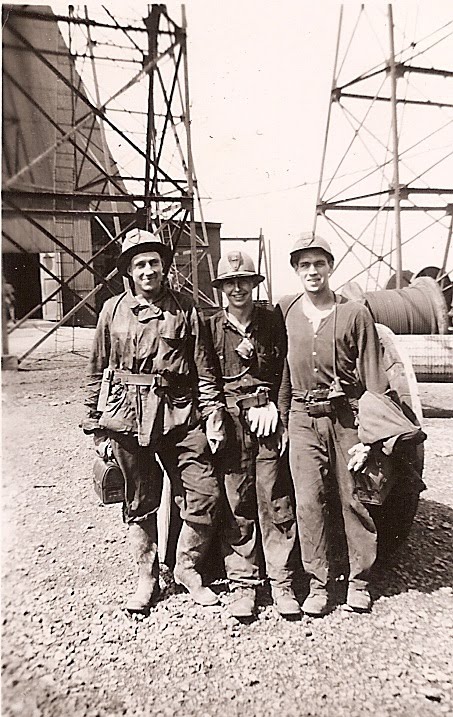
Here is a picture of me black and sweaty after a day's work.


As a place to work mines are dark, dirty, and dangerous and the farther down you go the hotter, more humid and unhealthy the air gets. Years ago miners took canaries in cages with them because if there wasn't enough oxygen in the air the canaries would be the first to die and the miners had time to leave, Its always night down there and if your lamp goes out its just black; there is no moon to guide you. And when you are deep in the mine your sweat soaks you from the Caribbean temperatures. I drank at least three litres of water a day and took salt tablets to avoid dehydration. As for danger the wall and part of the loose rock ceiling in my work area collapsed one day and luckily we were working on the other side of the cave or I would have been crushed or killed. Two young miner a few days later stepped to the side of the drift as a train approached and fell down an ore pass (a hole where the ore is dumped before being carried to the surface). Every seasoned miner can tell you stories about friends who had died or severely injured in terrible accidents such as being,trapped in a cave in, suffocated in an airless pocket. or having a wall collapse on them. Also many miners had their health destroyed and their lives shortened by silicosis, a terrible lung disease caused by breathing in the rock dust in the air. 

The Big Hole:I could read blueprints so I was selected over more seasoned miners to work in a large cavern where the ore was delivered by train to be dropped down a hole that went to the bottom of the mine. A big crushing station  was at the bottom where the ore was broken up into smaller pieces before being raised to the surface. This hole was at the 2200 foot level and dropped to the crushing station another 1600 feet (or about the height of the CN tower). In other words I was fastened to safety harness and had to scramble part way down the hole to feed feeding drilling rods and bits and later dynamite to the men working the drills to widen the hole. Once I slipped and dropped a drill rod down the hole - just imagine the clanging noise that sounded just like a church bell as it gradually faded in the distance down the great distance to the bottom of that hole.  I am terrified of heights but because it was so black I didn't have any fear of falling. At lunch time we would toss rocks down the hole just to listen to that sound fading in the distance.


Music: It was a great cavern and I got into the habit of bringing my chromatic harmonica with me to play at lunch time as we sat there with our lunch buckets. the roar of the drills had stopped and there was a silence only broken by the constant dripping of underground water.  It was like playing in a cathedral and the sound reverberating off those walls made the harmonica sound like a pipe organ.  I remember playing songs like "Peg O of my Heart, Blue Moon, Stardust and my terrible versions of parts of the William Tell Overture and Rhapsody in Blue" The men sure liked it and soon asked me to play some of their favourite sing-a-long songs, so we all got into singing as well.
 
The Changing Room: When you arrive at the mine to start your shift you first enter a changing room where you take off all your clothes and then put on your work clothes that you take down from a hook where they have been hanging from your last shift to dry out the sweat.They are stiff like boards from the salt in your sweat. Once a week you took them home to a laundromat to wash for the following week.That clothing included long underwear, jeans, socks and a long work shirt to keep you body covered. From your locker you took out your special steel-toed boots, glasses, gloves and a metal helmet. On the way out to the lift a man handed you a battery to fasten to your belt which had a wire leading to a lamp fixed onto your helmet.

From the changing room you enter a steel cage which is like a big elevator - along with about 20 other men. It can be a long way down. The lowest level I worked at was 4500 feet down – that’s like three time the height of the CN Tower in Toronto. The farther down you go the hotter it gets and even if it is sub zero on the surface it can be like a hot day on a Caribbean beach at the lowest level. 

At the end of the day you returned covered in dust mixed with oil from the pneumatic drills.Your exposed parts of your body, like your face and neck, are black. It was everything in reverse in the changing room including taking a big communal shower where you had to scrub every part of your body before changing back into your street clothes. Some men didn.t shower and just washed their hands and face before going home. they had their shower once a week on Saturday night. I wonder how their wives and kids felt about that?


The Main Work that I did in the Mine


Before talking about my main work in the mine here is a picture of the Swedish inventor, Alfred Nobel who in 1846 invented dynamite and blasting caps. Many years later he made it into a gelatinous substance that looks just like Silly Putty. Those inventions made modern mining methods possible. The Nobel Prize was named after him.

Most of my time in both the Murray Mine and Noranda Mine was spent in a cave that you climbed up to on ladders from the tunnel below. Two men worked in the cave, a certified miner and his apprentice helper. I was the helper with a lot to learn. The equipment we used in the cave included:
  • a large pneumatic drill that we lifted in place on a platform facing the wall we intended to drill in,
  • A smaller plugger drill for breaking up some bigger rocks left after the big blast. 
  • a pneumatic slusher machine that was used to drag the broken rocks after the blast from the wall to a hole that descended out of the cave
  • long crow bars to pry away loose rocks from the walls and ceiling before starting work each shift
  • shovels and sledgehammers to clean up after the work done by the equipment,
  • and dynamite and blasting caps and fuses when we were ready for them. 
The cycle of work basically involved first entering and inspecting the cave to see it was safe and prying off any loose rock, then deciding where to drill the holes in the wall, usually about 12 of them each about 3 or more metres feet deep, then when the holes were drilled loading them with dynamite sticks and a blasting cap with wires going to a detonator and then going off shift. At midnight all the dynamite was exploded in the mine when the miners had gone home. The houses would shake in town and you would hear a muffled boom. When you returned to your cave you cautiously entered to inspect the results of the blast and after scaling the cave to make it safe again you used the slushing machine, pluggers and shovels to clear out the loose rock. Sometime we had to place some dynamite again on a big rock in the pile of rubble, set a fuse to it and go down to the tunnel to wait for the blast and the air to clear. 

Nine hours a day and a six day week, it was hard backbreaking manual work. Their were few miners that were able to keep working after age 55. I remember an older muscular miner I worked with who complained that I was to skinny to work along with him. For the first two or three days he was right about that, but being young I quickly picked up speed and within a week I was telling him to get off his ass when he wanted to rest. He was a nice man and we got along very well after that.

Attempts to answer questions asked by readers: 
  • Wages - I recall it was about $1,13/hour for a 48 hour week. Certified miners earned about $1.23/hour which wasn't much more but they could earn an additional bonus for exceeding production quotas. It was enough to rent a place and support a small family. 
  • Lunchroom - Just a cave on each level with a few benches and some water available.You were expected to pack your own lunch bucket.  Many men ate at their workplace.
  • Toilets - You generally peed near where you worked or donated to the channel of acid water flowing by in the drift(tunnel). I don't remember much about the toilets but they were probably dry odorless chemical toilets commonly used in mines 


Working in the Mines II - Summers 1948/49/50


Chapter II – Starting Work and Settling in

A Personnel officer was very helpful in advising me in what I had to do before reporting for works in the mines. With the troops returning from the war accommodation was scarce and he advised me that if I was to find a room I should immediately check the rental ads in the local newspaper.  He also suggested that the first thing I should do is to go down to their office to collect a paper as it was coming off the press so I would have a first crack at what might be available.  I rushed down and managed to get a paper at the first stop the delivery van made after leaving the printing plant. After several discouraging calls telling me that their rooms had already been booked a friendly woman’s voice answered and said that if I hurried down she had one room left.

I recall that the house was near the top of a steep hill. It was a large three story wooden structure and freshly painted in white with a large porch running along the front. The porch was painted a bright red which I found unusual. A middle aged and portly woman stood on the porch and greeted me with an extended hand and a nice smile. She told me that she was the owner and manager and would show me a room to consider. I observed that she seemed to have an unusual amount of jewellery on for that time of day – rings, bracelets and a necklace –  but I didn’t give it much thought. On the right as we entered was a large living room. Two men were sitting in comfortable chairs playing checkers and a younger woman sat quietly watching.  As they waved at me she said these were some of her guests. She said her guests were like a family and I would like it here. 

The room was on the second floor. Spartan with a single bed and a chair, but it looked clean and adequate, the price was very reasonable and I decided to take it and made a small down payment for the rent.

As the owner was leaving the room she looked back and said you will find this a friendly place and I should mention that two young women about your age have rooms on this floor and would I like you to meet them? Before I could answer two cheery faces poked their heads around the corner and quickly entered the room. They were nice looking girls, lightly clad and friendly and said they were looking forward to seeing me again.

Being very innocent about life I was puzzled by all this friendliness but in any case rushed off  to shop for the clothing and boots I was expected to wear for working in the mines. I slept soundly that night undisturbed.

The next day I went down in the mine for the first time.  At a level 500 feet down I met at the landing the man who was going to be my senior partner. He was a big middle aged man, I guessed to be about 45, who had been working in the mines for most of his working life. He took one look at me and asked the foreman "Why have you sent me this skinny kid? He won't be able to handle his share of the work"  


 The foreman replied, "Well with the project you have been assigned to they were asking me to find someone who can read blueprints. He is a student engineer who just arrived yesterday. Give him a few days and we'll see how he works out." 


The subject was then dropped and my partner asked me, " Have you found a place to stay yet ? I know there is almost nothing in town now with all the troops coming home" 


"Yes I have." I responded. "I guess I was lucky because I found a really nice place in a big house up on the hill. The people are really friendly and I have already met a few people including some nice girls about my age. They also serve breakfast and you can get a beer at night in the lounge." 


"Oh that's interesting. What's the address?" he asked


I gave him the address and he burst out in laughter. "Don't you realize where you are staying? It's a boarding house for those old Swedes, Pollacks and other lonely single men. If they have a family it is far way somewhere. The madam makes her money providing them with food, boot leg booze and women. Do you want to stay there? Why do you think those nice girls that you met are living there?" 


"Gosh I didn't know this. I guess it is why everyone was so friendly. Yow!! I better start looking again"


"Kid I'll do you a favour. The Devers are good friends of me and my wife. Bill and his son work in this mine and his wife rents out rooms. I'll talk to him about this." 


To make a long story short I met Mrs Devers after work, they had a nice big house across from the jail, and although she didn't have a room I was able to share a bed with another miner who worked on another shift. Mrs Devers also had a daughter a bit younger than me that I took to the movies sometime. 

Mrs Devers was a devout religious woman who was constantly criticising the men in the jail yard that she could see wandering about in their striped pyjama like prison garb. Many of these prisoners were simply lumberjacks who had come into town and in a drunken stupor had got into a punch up or other  forms of disorderly behaviour and were just there for a short time. On occasion I recognized someone I had worked with in one of the two previous summers in the camps north of Sudbury and much to Mrs Devers horror and her daughter's amusement I would cross the street to talk with them through the fence. Old white haired Whitey was a typical example (seemed very old to me back then but was probably in his mid fifties), A gentle quiet and popular man in the camp who saved up enough money now and then to take the train down to Sudbury for a few days to look for a woman, ending up terribly drunk , fighting and  and usually getting his money stolen. A few days in jail to sober up and calm down and then he was released and given a return ticket back to the camp. This was a typical holiday for many lumberjacks and much discussed with merriment in the camp when they returned,


"

Friday, April 2, 2010

Working in the Mines I - Summers 1948/49/50


Chapter I – Passing the Medical and Starting Work

At the end of my first year of University in May I decided along with three close friends (Ted MacDonald, Maury Katz and Bob Barrow) to head north to work in the mines instead of another season in the lumber camps. The pay was more than twice what I had been earning in the camps, a sum sufficient to pay for my university fees and to help my parents with additional living expenses. An added incentive was the leisurely 54 hours work week instead of the basic 60 hours I had to endure in the camps.   

In early June I took the train to Sudbury and went immediately to the employment office of  The International Nickel Company that had several mines and a smelter in the area. After filling in the application forms I was sent to their medical office. Part of the medical examination was a weighing in, and I was dismayed to learn that at 133 pounds I failed to meet their minimum weight requirement of 140 pounds for students. I was devastated and as I was leaving the clinic the doctor, to soften the blow, promised that if I gained some weight at a later date the employment offer was still open. I certainly wasn’t going to gain that much weight overnight and this meant leaving my friends and taking a train farther north to spend another summer in the lumber camps.

Before heading north I joined with my friends in a bar to commiserate and say my good byes. Bob Barrow asked, “Have you thought about loading up on water and then going back to the medical office to get weighed again?”

I said, “Are you crazy? Seven pounds of water equals 112 ounces or about nine 12 ounce bottles of this Pepsi we are drinking - and the doctor would never believe me anyway.” 

Bob replied, “Well you have nothing to lose so let’s keep going; you are on your second bottle now and you have just finished eating a hot dog and chips so let’s switch to water and aim for just six or seven more.”

I had nothing to lose, other than blowing up, so we asked the bar maid for two large glasses of water. When she watched me quickly down these and gasp for air while my friends cheered me on she grinned nervously and asked. “What are you guys doing? Is this some sort of bet? “  

“No this is very serious”. Bob replied, and without adding an explanation, asked for two more glasses. 

"Well I don't know if I should, and this is the last time because I don't want to get in trouble." She served two more up.  

Turning to me Bob said, “Well if you finish those two glasses that makes six or about four and a half pounds; add the hot dog and chips and we are closer to five pounds so we are almost there."

"I can't." I said. 

"Shut up and drink." he replied, so taking a deep breath I downed the two glasses of water. "Great now you have only 3 glasses to go, and miss, three more glasses please. And have pity on this guy, because if you won't serve it he won't get a job in the mine here because he doesn't weigh enough and will have to leave Sudbury to find work."

By now I could hardly breathe but as an act of bravado I gasped out to change that order to just two more glass and another order of chips and a hot dog to wash it down.

" Well okay, but I'm really scared now, this is dangerous,  but I will do it - and don't tell my boss if he blows up." she said.

Bob phoned for a cab because there was no time to lose; I was bursting. I downed the last glass of water and staggered out to the cab with my hot dog in hand and my belt undone. In ten minutes we were at the medical centre and I raced in and God must have been with me because the doctor was still there.

I calmly said, “I have gained those pounds so please weigh me” He looked at me amused and replied. “Don’t be ridiculous. You are probably carrying stones or a brick.” 

“No,” I said, “I have really gained this weight. I didn't eat anything on the train coming up from Montreal and didn’t drink much but I’m back to my normal weight now.” 

“OK , but I don’t believe you, but you can take off all your clothes and I will weigh you again”

I stepped on the scales and when he saw the weight gain he laughed and said in amazement. “Holy Cow!, I don’t know what you did, but I guess I have to sign off so that you can get that job!” At that moment I was ready to explode and asked to leave the room and raced down the hall  for the wash room. I just made it and with a sense of relief quickly lost most of those extra pounds. That was probably the happiest pee I ever had. And I was hired.

I think the doctor knew what I had done and I learned later from Ted MacDonald that management picked up on this story and were much amused. 

I visited Bob Barrow for the last time in Ottawa two years ago. He was dying but still had the strength and sense of humour to share our memories of this event from many years ago. 

The last story about being hired is about the old foreman at the Murray mine who had the new recruits lined up for inspection before being assigned. There were about a dozen of us. He looked us over and made some cynical comments about how green we looked and how we needed toughening up. Then he asked us to show him the palms of our hands and walked up and down to feel our biceps. I was probably the skinniest and youngest in that line up but he singled me out and said, “kid I can see you have done some hard work;” I guess that lumbering experience had paid off.

Boy! Was I proud.